Proudly Serving Nashville and Surrounding Communities
Call us right now: (615) 794-6535
Text us right now: (615) 235-6476
Categories
Spiders

Why Nashville’s Humidity Can Make Your Home More Attractive to Spiders

Nashville’s humidity can indirectly make a home more attractive to spiders by supporting the insects they eat and keeping certain areas damp. Moist crawl spaces, bathrooms, basements, garages, and shaded exterior zones may hold more prey than dry, well-ventilated locations. The relationship varies by spider species, so effective Nashville spider control looks at moisture, prey, entry points, and identification together.

Humidity Changes the Insect Activity Around a Home

Spiders follow food. Flies, mosquitoes, springtails, silverfish, cockroaches, and other small arthropods may become more active where moisture and organic material are available. A spider web near a damp foundation corner or a bathroom window may be positioned there because insects repeatedly pass through.

Warm, humid evenings also support outdoor insect activity. Porch and landscape lights pull flying insects toward doors, windows, eaves, and covered patios. Web-building spiders often settle nearby. As a result, humidity, lighting, and prey can combine to produce a noticeable ring of spider activity around the house.

The same process can occur indoors. A slow plumbing leak, condensation, poor airflow, or damp crawl space may create localized conditions that support prey. The room itself can look clean while moisture and insects remain behind cabinets, beneath fixtures, or inside a void.

Different Spiders Prefer Different Conditions

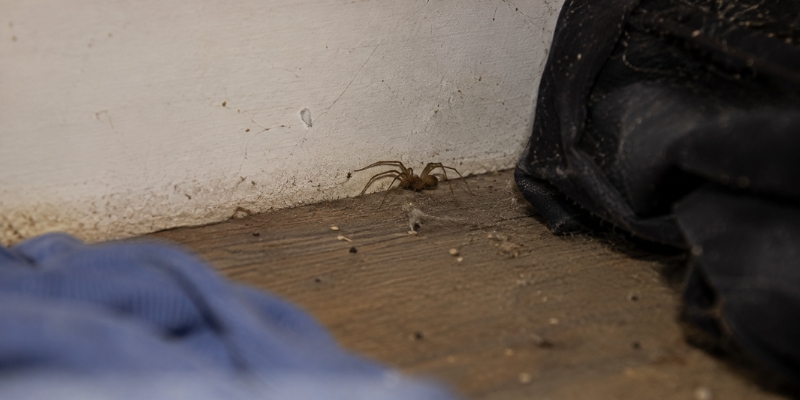
Humidity should not be treated as a universal spider magnet. Cellar spiders and several common house spiders may occupy damp or sheltered spaces, while brown recluse spiders are often associated with dry, protected indoor areas. Brown recluses still need prey and can live in a humid region, but a damp bathroom alone does not identify them.

Species identification changes the explanation. Large wheel-shaped webs near outdoor lighting indicate web builders taking advantage of flying insects. A fast-moving spider near a garage door may be a hunting species that entered from outside. A plain brown spider found among undisturbed boxes raises a different set of questions.

Record where and when sightings occur. Note whether a web is structured or irregular, whether moisture is visible, and whether small insects are present. These observations provide better guidance than color alone.

Common Moisture Zones Deserve Attention

Bathrooms and kitchens naturally produce water vapor, but exhaust fans, plumbing, and drainage should prevent persistent dampness. Check beneath sinks, around toilets, behind appliances, and near windows for leaks or condensation. Repair plumbing problems and use ventilation as intended.

Crawl spaces and basements can be influenced by rain, grading, downspouts, groundwater, and uncovered soil. Garages may collect water near doors or contain wet cardboard and equipment. Exterior shade, dense plants, clogged drainage areas, and leaf litter can hold moisture close to the foundation.

Moisture stains, musty odors, standing water, damp insulation, or damaged wood deserve prompt evaluation. Pest treatment cannot correct a plumbing, drainage, structural, or ventilation defect. Addressing those conditions can remove support for insect prey and protect the building for reasons beyond pest control.

Lower the Pest Pressure Around Damp Areas

Start with the moisture source. Fix leaks, improve appropriate ventilation, and direct exterior water away from the structure where practical. Clean organic debris from drains and wet exterior corners. Empty containers that collect water and avoid leaving damp towels, cardboard, or stored materials piled against walls.

Repair screens, worn weatherstripping, and suitable gaps around penetrations. Move exterior lights away from frequently opened doors when possible or choose bulbs that attract fewer insects. Trim vegetation away from the house to improve access for inspection and reduce sheltered pest routes.

Vacuum indoor webs and keep a simple record of recurring activity. The insects seen near those same locations can be as informative as the spider itself.

Look for Patterns Instead of One Cause

Humidity may be one part of the explanation, but a useful inspection asks several questions. Which spider is present? Where is prey concentrated? How are pests entering? Are sightings limited to one damp room or spread into dry storage? Does activity increase after rain, during warm evenings, or when exterior lights are used?

Those patterns lead to practical recommendations. A home with insects around a wet crawl space needs a different approach from a dry attic with brown recluse monitoring captures. Treating both situations as a generic humidity problem would miss the conditions that actually support the spiders.

If humid areas around your Nashville home seem to be drawing insects and spiders, All Pest Solutions can examine the activity and build a plan around the evidence. Schedule an inspection with All Pest Solutions to learn which moisture, entry, prey, and spider-control steps fit your property.
Categories
Spiders

What Attracts Spiders to Nashville Crawl Spaces?

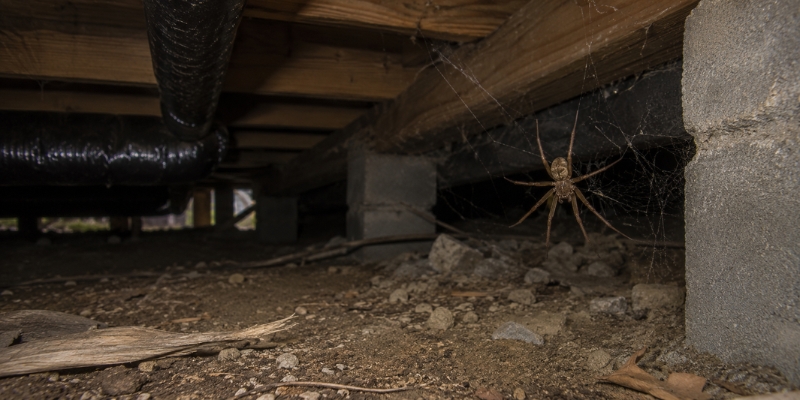
Crawl spaces can attract spiders when they provide insect prey, protected corners, moisture, and routes into the structure. Nashville’s humid conditions and seasonal rain can increase dampness beneath a home, especially where drainage, plumbing, or ventilation problems are present. Spiders then take advantage of the insects living or traveling there. All Pest Solutions provides spider control in Nashville for homes where crawl-space activity is contributing to repeated sightings.

Insect Prey Is the Main Draw

Spiders need food, and a crawl space can support many small pests. Crickets, beetles, ants, flies, mosquitoes, springtails, silverfish, and other arthropods may use the area depending on its moisture and access points. Web-building spiders position themselves along travel routes, while hunting spiders move through the space in search of prey.

A high number of spiders can therefore signal broader insect activity. Removing webs without looking at what the spiders are eating leaves the food source in place. A complete evaluation considers both the spiders and the pests captured in monitoring traps or found around wood, insulation, plumbing, vents, and the crawl-space entrance.

Moisture Supports a Crawl-Space Food Web

Spiders vary in their moisture preferences, but many of their prey species thrive in damp environments. Humid air, plumbing leaks, groundwater, poor exterior drainage, condensation, and uncovered soil can all influence crawl-space conditions. Wet wood or persistent standing water may also indicate building concerns that require the appropriate repair professional.

Nashville humidity can slow drying after rain. Downspouts that release water near the foundation, negative grading, or clogged drainage paths may add to the problem. A pest-control inspection can identify visible pest conditions, while drainage, plumbing, structural, or moisture problems may need evaluation by qualified specialists in those fields.

Watch for musty odors, condensation, damp insulation, water marks, or recurring pests near the crawl-space access. These clues help explain why insects and spiders are using the area.

Openings Create Travel Routes

Crawl spaces often contain vents, utility penetrations, access doors, foundation joints, and other openings. Damaged vent screens or poorly fitting access covers can allow insects and spiders to enter. Gaps around pipes and cables may also connect the crawl space with wall voids or living areas.

Common conditions worth checking include:

  • Torn or missing screens over crawl-space vents
  • Gaps around plumbing, electrical, and HVAC penetrations
  • An access door that does not close securely
  • Cracks or joints that allow pest movement
  • Vegetation, leaf litter, or stored materials against the foundation
  • Exterior lighting that attracts insects near an opening

Seal only openings that can be closed safely. Ventilation requirements, drainage paths, combustion equipment, and utility access must be considered before altering a crawl space.

Undisturbed Structure Gives Spiders Shelter

Floor joists, piers, insulation edges, sill plates, and stored construction materials create protected attachment points. Crawl spaces also receive little human activity, so webs can remain in place and hunting spiders can rest beneath debris or insulation.

Some spiders found below a home are outdoor species using a sheltered location. Others may move between the crawl space, wall voids, and interior rooms. The species and pattern of sightings determine how much the crawl space is affecting indoor activity.

Brown recluse spiders can use protected areas in and around structures, but a brown spider in a crawl space should not be identified by color alone. Wolf spiders, cellar spiders, funnel weavers, and other species may also be present. Captured specimens and clear photographs help prevent misidentification.

Signs the Crawl Space May Be Connected to Indoor Sightings

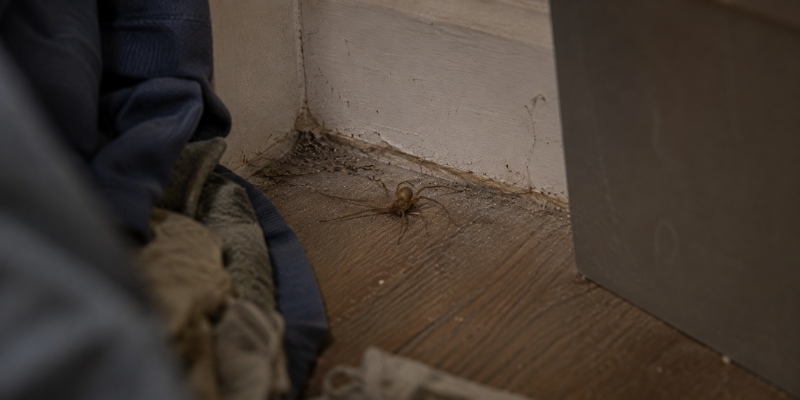
Spiders repeatedly appearing in rooms above the same section of the home can suggest a nearby route, though inspection is needed to confirm it. Activity around plumbing chases, floor registers, baseboards, or an interior crawl space access may also provide clues.

Track indoor sightings without entering the crawl space. Record the room, time, and nearby plumbing or floor openings, and save a clear photograph when possible. A pattern of activity gives an inspector useful direction while keeping you out of a potentially hazardous area.

Crawl-space entry presents hazards such as low clearance, exposed wiring, wildlife, sharp materials, unstable surfaces, mold, and contaminated insulation. Leave difficult or unsafe access to trained professionals with appropriate equipment.

Reduce the Conditions Supporting Activity

Start outside by directing downspouts away from the foundation where appropriate, removing leaf litter, trimming dense vegetation, and keeping stored materials away from vents and access doors. Repair damaged screens and secure the access cover. Plumbing leaks or drainage concerns should be addressed promptly by the right professional.

Inside the home, vacuum visible spiders and webs; reduce insects around doors and windows; and monitor rooms near suspected routes. These steps support a broader plan without requiring risky crawl-space work.

If spiders are appearing near your floors, plumbing areas, or crawl-space access, All Pest Solutions can inspect the pest activity and determine how the space may be contributing. Contact All Pest Solutions to arrange a Nashville spider inspection and discuss the findings.

Categories
Spiders

Why You’re Finding Spiders in Your Nashville Home Even After Cleaning

A clean home can still provide spiders with food, shelter, and a way inside. Routine cleaning removes visible webs and some insects, but spiders may remain in wall gaps, storage, crawl spaces, attics, and other places a vacuum or duster never reaches. Repeated sightings often point to prey, access, or hidden habitat that needs a closer look. All Pest Solutions offers Nashville spider control that begins with understanding the activity around your property.

Clean Surfaces Do Not Remove Every Food Source

Spiders eat insects and other small arthropods. A house can look spotless while moths gather near exterior lights, ants travel through a wall gap, flies reproduce near organic residue, or small crawling pests occupy a crawl space. Some prey remain active behind appliances, under cabinets, in drains, in stored food areas, or around moisture sources that normal surface cleaning misses.

Outdoor insects also enter through open doors, damaged screens, utility openings, and spaces beneath garage doors. A spider may follow the same general access routes or settle where prey repeatedly appears. Cleaning the floor after a sighting removes the immediate evidence but leaves those routes unchanged.

Look for where spiders appear rather than judging the entire home by one room. Webs around a porch light suggest concentrated outdoor prey. Spiders along a bathroom baseboard may be traveling from a void or moisture-prone area. Repeated catches near the garage can reflect storage and exterior access.

Hidden Spaces Remain Undisturbed

Spiders benefit from narrow protected areas. The back of a heavy cabinet, a gap beside trim, the underside of furniture, and a stack of boxes can remain untouched during regular cleaning. Attics and crawl spaces may also contain insects and shelter while receiving little routine attention.

Web-building species may place silk in upper corners or behind stored materials. Hunting spiders may rest under objects and move at night. Brown recluse spiders favor dry, secluded locations and may remain hidden during the day. Different behavior requires different inspection methods, which is why species identification is useful before deciding what to change.

Decluttering can expose these areas, but move belongings carefully. Wear gloves when handling long-stored boxes or fabric. Shake out shoes and clothing before use. Replace worn cardboard with sealed plastic containers and keep storage slightly away from walls where practical.

Web Removal Addresses One Part of the Problem

Vacuuming webs and egg sacs is a helpful maintenance step. It removes visible material and may interrupt activity in an accessible corner. Recurring webs in the same location usually show that the site still offers reliable prey and protection.

Consider the features around that location. A web beside a window may sit near a damaged screen. One under an eave may benefit from a nearby light. A garage corner may contain both a door gap and stacked storage. Fixing the supporting condition gives cleaning a longer-lasting effect.

Dispose of vacuum contents outside in a sealed bag. Avoid brushing a suspected medically significant spider or egg sac into another part of the house. A professional can help when the species is uncertain or the area is difficult to reach safely.

Entry Points Can Be Easy to Overlook

Spiders need only small openings. Worn weatherstripping, loose screens, gaps around pipes and cables, siding joints, vents, and cracks near doors may allow movement. Items brought indoors can transport spiders as well. Firewood, plants, patio cushions, storage totes, used furniture, and delivered boxes deserve a quick check before they move into living or storage areas.

Seal appropriate gaps, repair screens, and replace door sweeps while preserving necessary airflow and drainage. Trim plants away from siding and move firewood away from the structure. Adjust exterior lighting when it draws large numbers of insects directly beside an entrance.

These changes reduce opportunities, yet occasional spiders may still enter. The goal is to lower the conditions that support repeated indoor activity and make new evidence easier to notice.

Monitoring Shows What Cleaning Cannot

Place glue boards along walls, behind furniture, near garage edges, or in quiet storage areas according to the label. Keep them inaccessible to children and pets. Date each board and record the types and numbers of spiders or insects captured.

Monitoring can reveal a travel route, show whether several rooms are involved, and preserve specimens for identification. It may also expose a broader prey problem. Empty boards do not prove the home has no spiders, but a well-planned group of traps provides better information than relying on memory of occasional sightings.

An Inspection Connects the Clues

Persistent spider activity rarely has one universal cause. One Nashville home may need screen and door repairs, while another has insect prey around a damp crawl space. A third may contain brown recluse retreats in undisturbed storage. Inspection connects the species, location, prey, access points, and pattern of sightings so control can be directed where it is useful.

If spiders keep turning up after you clean, let All Pest Solutions look beyond the visible web. Reach out to All Pest Solutions to schedule an inspection and discuss a spider-control plan for the conditions in your Nashville home.

Categories
Spiders

Where Brown Recluse Spiders Hide During the Day—and Why You Rarely See Them

Brown recluse spiders spend daylight hours in protected retreats and usually become more active after dark. Their habit of staying behind stored items, inside cracks, beneath objects, or along quiet edges allows them to remain in a building without frequent open sightings. When nighttime spiders or monitoring traps suggest hidden activity, professional spider control in Nashville can help determine where they may be traveling and sheltering.

Daytime Retreats Provide Darkness and Protection

The name “recluse” describes an important part of the spider’s behavior. Brown recluses avoid exposed, high-traffic locations when secure cover is available. During the day, they may rest in a small irregular web or press into a narrow space where their tan-brown coloring is difficult to notice.

Common retreats include the backs of closets, spaces beneath furniture, the underside of shelving, gaps beside baseboards, wall voids, folded cardboard, attic edges, garage cabinets, and boxes of seldom-used belongings. A retreat may be only a few inches from an open room while remaining hidden from normal view.

Indoor temperature and lighting stay relatively stable compared with outdoor conditions. That stability lets spiders use the same protected zones over time. Daily cleaning may pass around the outside of a cabinet or box without reaching the narrow space behind it.

Nighttime Movement Creates Most Sightings

Brown recluses hunt small arthropods and may leave a retreat after dark. Males also wander while searching for mates. A spider crossing a floor at night may therefore be traveling between shelter, prey, and another part of the structure.

Morning discoveries in sinks and bathtubs are common with many spider species. Smooth surfaces can prevent a wandering spider from climbing back out after it falls in. The fixture itself may have trapped the spider even though the drain was never an entry route.

Open sightings can increase when stored belongings are moved, rooms are remodeled, or established retreats are disturbed. Seasonal changes and indoor prey activity may also affect movement. A sudden sighting provides a clue about location and timing, but it cannot show the full extent of activity without additional evidence.

The Hiding Place May Be Smaller Than Expected

People often picture a spider living in a large dusty web. Brown recluse retreats can be subtle. Loose, irregular silk may sit inside a crack, under an object, or between layers of material. Shed skins and egg sacs can be hidden in the same protected areas.

Their flattened body shape lets them use thin spaces around boxes, trim, stored papers, furniture, and structural joints. This ability also makes broad visual searches less reliable. Looking into the center of a room will miss most of the edges, voids, and undersides where a reclusive spider is likely to rest.

Useful inspections concentrate on patterns. Where have spiders been seen? Which walls do monitoring boards follow? What rooms contain undisturbed storage? Where does insect prey appear? Do several captures occur near the same closet, attic access, or garage wall? These details lead to a more focused evaluation.

Monitor Travel Routes Without Reaching Into Retreats

Glue boards can help reveal activity along baseboards, closet edges, behind furniture, and near storage. Place them according to product instructions where children and pets cannot contact them. Numbering the boards and recording dates makes changes easier to compare.

A single empty board provides limited information. Placement may miss the spider’s travel route, and hidden spiders may remain in their retreats for extended periods. Several boards used over time create a clearer picture. Captured specimens can also support identification when the body remains intact.

Avoid probing wall gaps, boxes, or dark corners with bare hands. Use gloves when handling stored materials, shake out shoes and clothing, and keep a safe distance from a live spider. Professional inspection is a safer option for attics, crawl spaces, heavy storage, or areas with electrical and structural hazards.

Reduce Contact Points Around the Home

Organization makes hidden areas easier to see and reduces the chance of pressing a spider against the skin. Move loose items into sealed plastic containers. Keep clothing and linens in closed storage. Place beds slightly away from walls and avoid allowing bedding to trail onto the floor. Check shoes, work gloves, and garments that have remained unused.

Vacuum accessible cracks, corners, and the space beneath furniture. Remove clutter gradually and carefully, especially when brown recluse activity is suspected. Seal suitable gaps after considering ventilation, drainage, and utility access. Addressing other insects may also reduce the prey available to spiders.

Hidden Behavior Calls for Evidence-Based Control

Seeing very few brown recluse spiders can be consistent with their normal behavior. It can also reflect a small or isolated issue. Inspection, correct identification, and monitoring are the best ways to tell the difference. Treatment should focus on confirmed or likely activity areas rather than relying on visible spiders alone.

If you are finding possible brown recluses at night or suspect they are hiding in quiet parts of your Nashville home, All Pest Solutions can evaluate the evidence and recommend a plan. Contact All Pest Solutions for an inspection and share where and when the spiders have appeared.