
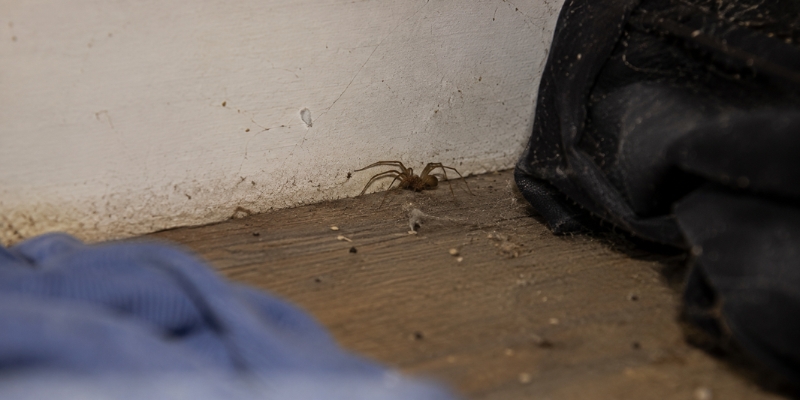
Brown recluse spiders spend daylight hours in protected retreats and usually become more active after dark. Their habit of staying behind stored items, inside cracks, beneath objects, or along quiet edges allows them to remain in a building without frequent open sightings. When nighttime spiders or monitoring traps suggest hidden activity, professional spider control in Nashville can help determine where they may be traveling and sheltering.
Daytime Retreats Provide Darkness and Protection
The name “recluse” describes an important part of the spider's behavior. Brown recluses avoid exposed, high-traffic locations when secure cover is available. During the day, they may rest in a small irregular web or press into a narrow space where their tan-brown coloring is difficult to notice.
Common retreats include the backs of closets, spaces beneath furniture, the underside of shelving, gaps beside baseboards, wall voids, folded cardboard, attic edges, garage cabinets, and boxes of seldom-used belongings. A retreat may be only a few inches from an open room while remaining hidden from normal view.
Indoor temperature and lighting stay relatively stable compared with outdoor conditions. That stability lets spiders use the same protected zones over time. Daily cleaning may pass around the outside of a cabinet or box without reaching the narrow space behind it.
Nighttime Movement Creates Most Sightings
Brown recluses hunt small arthropods and may leave a retreat after dark. Males also wander while searching for mates. A spider crossing a floor at night may therefore be traveling between shelter, prey, and another part of the structure.
Morning discoveries in sinks and bathtubs are common with many spider species. Smooth surfaces can prevent a wandering spider from climbing back out after it falls in. The fixture itself may have trapped the spider even though the drain was never an entry route.
Open sightings can increase when stored belongings are moved, rooms are remodeled, or established retreats are disturbed. Seasonal changes and indoor prey activity may also affect movement. A sudden sighting provides a clue about location and timing, but it cannot show the full extent of activity without additional evidence.
The Hiding Place May Be Smaller Than Expected
People often picture a spider living in a large dusty web. Brown recluse retreats can be subtle. Loose, irregular silk may sit inside a crack, under an object, or between layers of material. Shed skins and egg sacs can be hidden in the same protected areas.
Their flattened body shape lets them use thin spaces around boxes, trim, stored papers, furniture, and structural joints. This ability also makes broad visual searches less reliable. Looking into the center of a room will miss most of the edges, voids, and undersides where a reclusive spider is likely to rest.
Useful inspections concentrate on patterns. Where have spiders been seen? Which walls do monitoring boards follow? What rooms contain undisturbed storage? Where does insect prey appear? Do several captures occur near the same closet, attic access, or garage wall? These details lead to a more focused evaluation.
Monitor Travel Routes Without Reaching Into Retreats
Glue boards can help reveal activity along baseboards, closet edges, behind furniture, and near storage. Place them according to product instructions where children and pets cannot contact them. Numbering the boards and recording dates makes changes easier to compare.
A single empty board provides limited information. Placement may miss the spider's travel route, and hidden spiders may remain in their retreats for extended periods. Several boards used over time create a clearer picture. Captured specimens can also support identification when the body remains intact.
Avoid probing wall gaps, boxes, or dark corners with bare hands. Use gloves when handling stored materials, shake out shoes and clothing, and keep a safe distance from a live spider. Professional inspection is a safer option for attics, crawl spaces, heavy storage, or areas with electrical and structural hazards.
Reduce Contact Points Around the Home
Organization makes hidden areas easier to see and reduces the chance of pressing a spider against the skin. Move loose items into sealed plastic containers. Keep clothing and linens in closed storage. Place beds slightly away from walls and avoid allowing bedding to trail onto the floor. Check shoes, work gloves, and garments that have remained unused.
Vacuum accessible cracks, corners, and the space beneath furniture. Remove clutter gradually and carefully, especially when brown recluse activity is suspected. Seal suitable gaps after considering ventilation, drainage, and utility access. Addressing other insects may also reduce the prey available to spiders.
Hidden Behavior Calls for Evidence-Based Control
Seeing very few brown recluse spiders can be consistent with their normal behavior. It can also reflect a small or isolated issue. Inspection, correct identification, and monitoring are the best ways to tell the difference. Treatment should focus on confirmed or likely activity areas rather than relying on visible spiders alone.
If you are finding possible brown recluses at night or suspect they are hiding in quiet parts of your Nashville home, All Pest Solutions can evaluate the evidence and recommend a plan. Contact All Pest Solutions for an inspection and share where and when the spiders have appeared.