
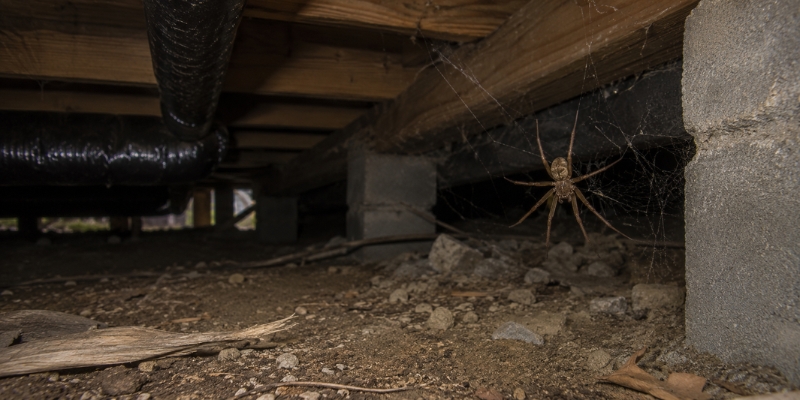
Crawl spaces can attract spiders when they provide insect prey, protected corners, moisture, and routes into the structure. Nashville's humid conditions and seasonal rain can increase dampness beneath a home, especially where drainage, plumbing, or ventilation problems are present. Spiders then take advantage of the insects living or traveling there. All Pest Solutions provides spider control in Nashville for homes where crawl-space activity is contributing to repeated sightings.
Insect Prey Is the Main Draw
Spiders need food, and a crawl space can support many small pests. Crickets, beetles, ants, flies, mosquitoes, springtails, silverfish, and other arthropods may use the area depending on its moisture and access points. Web-building spiders position themselves along travel routes, while hunting spiders move through the space in search of prey.
A high number of spiders can therefore signal broader insect activity. Removing webs without looking at what the spiders are eating leaves the food source in place. A complete evaluation considers both the spiders and the pests captured in monitoring traps or found around wood, insulation, plumbing, vents, and the crawl-space entrance.
Moisture Supports a Crawl-Space Food Web
Spiders vary in their moisture preferences, but many of their prey species thrive in damp environments. Humid air, plumbing leaks, groundwater, poor exterior drainage, condensation, and uncovered soil can all influence crawl-space conditions. Wet wood or persistent standing water may also indicate building concerns that require the appropriate repair professional.
Nashville humidity can slow drying after rain. Downspouts that release water near the foundation, negative grading, or clogged drainage paths may add to the problem. A pest-control inspection can identify visible pest conditions, while drainage, plumbing, structural, or moisture problems may need evaluation by qualified specialists in those fields.
Watch for musty odors, condensation, damp insulation, water marks, or recurring pests near the crawl-space access. These clues help explain why insects and spiders are using the area.
Openings Create Travel Routes
Crawl spaces often contain vents, utility penetrations, access doors, foundation joints, and other openings. Damaged vent screens or poorly fitting access covers can allow insects and spiders to enter. Gaps around pipes and cables may also connect the crawl space with wall voids or living areas.
Common conditions worth checking include:
- Torn or missing screens over crawl-space vents
- Gaps around plumbing, electrical, and HVAC penetrations
- An access door that does not close securely
- Cracks or joints that allow pest movement
- Vegetation, leaf litter, or stored materials against the foundation
- Exterior lighting that attracts insects near an opening
Seal only openings that can be closed safely. Ventilation requirements, drainage paths, combustion equipment, and utility access must be considered before altering a crawl space.
Undisturbed Structure Gives Spiders Shelter
Floor joists, piers, insulation edges, sill plates, and stored construction materials create protected attachment points. Crawl spaces also receive little human activity, so webs can remain in place and hunting spiders can rest beneath debris or insulation.
Some spiders found below a home are outdoor species using a sheltered location. Others may move between the crawl space, wall voids, and interior rooms. The species and pattern of sightings determine how much the crawl space is affecting indoor activity.
Brown recluse spiders can use protected areas in and around structures, but a brown spider in a crawl space should not be identified by color alone. Wolf spiders, cellar spiders, funnel weavers, and other species may also be present. Captured specimens and clear photographs help prevent misidentification.
Signs the Crawl Space May Be Connected to Indoor Sightings
Spiders repeatedly appearing in rooms above the same section of the home can suggest a nearby route, though inspection is needed to confirm it. Activity around plumbing chases, floor registers, baseboards, or an interior crawl space access may also provide clues.
Track indoor sightings without entering the crawl space. Record the room, time, and nearby plumbing or floor openings, and save a clear photograph when possible. A pattern of activity gives an inspector useful direction while keeping you out of a potentially hazardous area.
Crawl-space entry presents hazards such as low clearance, exposed wiring, wildlife, sharp materials, unstable surfaces, mold, and contaminated insulation. Leave difficult or unsafe access to trained professionals with appropriate equipment.
Reduce the Conditions Supporting Activity
Start outside by directing downspouts away from the foundation where appropriate, removing leaf litter, trimming dense vegetation, and keeping stored materials away from vents and access doors. Repair damaged screens and secure the access cover. Plumbing leaks or drainage concerns should be addressed promptly by the right professional.
Inside the home, vacuum visible spiders and webs; reduce insects around doors and windows; and monitor rooms near suspected routes. These steps support a broader plan without requiring risky crawl-space work.
If spiders are appearing near your floors, plumbing areas, or crawl-space access, All Pest Solutions can inspect the pest activity and determine how the space may be contributing. Contact All Pest Solutions to arrange a Nashville spider inspection and discuss the findings.