
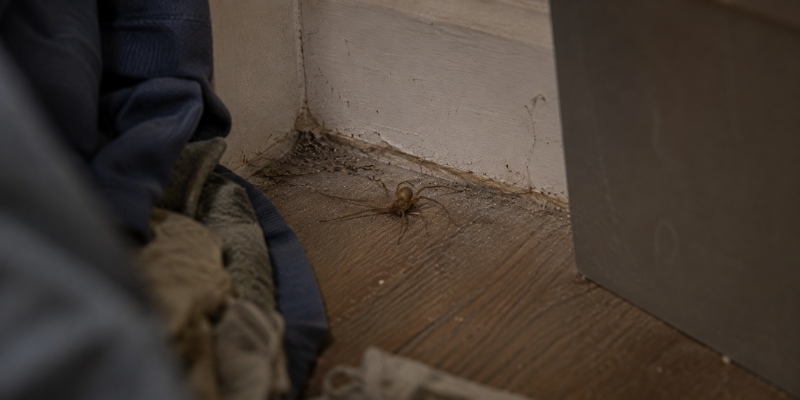
A clean home can still provide spiders with food, shelter, and a way inside. Routine cleaning removes visible webs and some insects, but spiders may remain in wall gaps, storage, crawl spaces, attics, and other places a vacuum or duster never reaches. Repeated sightings often point to prey, access, or hidden habitat that needs a closer look. All Pest Solutions offers Nashville spider control that begins with understanding the activity around your property.
Clean Surfaces Do Not Remove Every Food Source
Spiders eat insects and other small arthropods. A house can look spotless while moths gather near exterior lights, ants travel through a wall gap, flies reproduce near organic residue, or small crawling pests occupy a crawl space. Some prey remain active behind appliances, under cabinets, in drains, in stored food areas, or around moisture sources that normal surface cleaning misses.
Outdoor insects also enter through open doors, damaged screens, utility openings, and spaces beneath garage doors. A spider may follow the same general access routes or settle where prey repeatedly appears. Cleaning the floor after a sighting removes the immediate evidence but leaves those routes unchanged.
Look for where spiders appear rather than judging the entire home by one room. Webs around a porch light suggest concentrated outdoor prey. Spiders along a bathroom baseboard may be traveling from a void or moisture-prone area. Repeated catches near the garage can reflect storage and exterior access.
Hidden Spaces Remain Undisturbed
Spiders benefit from narrow protected areas. The back of a heavy cabinet, a gap beside trim, the underside of furniture, and a stack of boxes can remain untouched during regular cleaning. Attics and crawl spaces may also contain insects and shelter while receiving little routine attention.
Web-building species may place silk in upper corners or behind stored materials. Hunting spiders may rest under objects and move at night. Brown recluse spiders favor dry, secluded locations and may remain hidden during the day. Different behavior requires different inspection methods, which is why species identification is useful before deciding what to change.
Decluttering can expose these areas, but move belongings carefully. Wear gloves when handling long-stored boxes or fabric. Shake out shoes and clothing before use. Replace worn cardboard with sealed plastic containers and keep storage slightly away from walls where practical.
Web Removal Addresses One Part of the Problem
Vacuuming webs and egg sacs is a helpful maintenance step. It removes visible material and may interrupt activity in an accessible corner. Recurring webs in the same location usually show that the site still offers reliable prey and protection.
Consider the features around that location. A web beside a window may sit near a damaged screen. One under an eave may benefit from a nearby light. A garage corner may contain both a door gap and stacked storage. Fixing the supporting condition gives cleaning a longer-lasting effect.
Dispose of vacuum contents outside in a sealed bag. Avoid brushing a suspected medically significant spider or egg sac into another part of the house. A professional can help when the species is uncertain or the area is difficult to reach safely.
Entry Points Can Be Easy to Overlook
Spiders need only small openings. Worn weatherstripping, loose screens, gaps around pipes and cables, siding joints, vents, and cracks near doors may allow movement. Items brought indoors can transport spiders as well. Firewood, plants, patio cushions, storage totes, used furniture, and delivered boxes deserve a quick check before they move into living or storage areas.
Seal appropriate gaps, repair screens, and replace door sweeps while preserving necessary airflow and drainage. Trim plants away from siding and move firewood away from the structure. Adjust exterior lighting when it draws large numbers of insects directly beside an entrance.
These changes reduce opportunities, yet occasional spiders may still enter. The goal is to lower the conditions that support repeated indoor activity and make new evidence easier to notice.
Monitoring Shows What Cleaning Cannot
Place glue boards along walls, behind furniture, near garage edges, or in quiet storage areas according to the label. Keep them inaccessible to children and pets. Date each board and record the types and numbers of spiders or insects captured.
Monitoring can reveal a travel route, show whether several rooms are involved, and preserve specimens for identification. It may also expose a broader prey problem. Empty boards do not prove the home has no spiders, but a well-planned group of traps provides better information than relying on memory of occasional sightings.
An Inspection Connects the Clues
Persistent spider activity rarely has one universal cause. One Nashville home may need screen and door repairs, while another has insect prey around a damp crawl space. A third may contain brown recluse retreats in undisturbed storage. Inspection connects the species, location, prey, access points, and pattern of sightings so control can be directed where it is useful.
If spiders keep turning up after you clean, let All Pest Solutions look beyond the visible web. Reach out to All Pest Solutions to schedule an inspection and discuss a spider-control plan for the conditions in your Nashville home.