
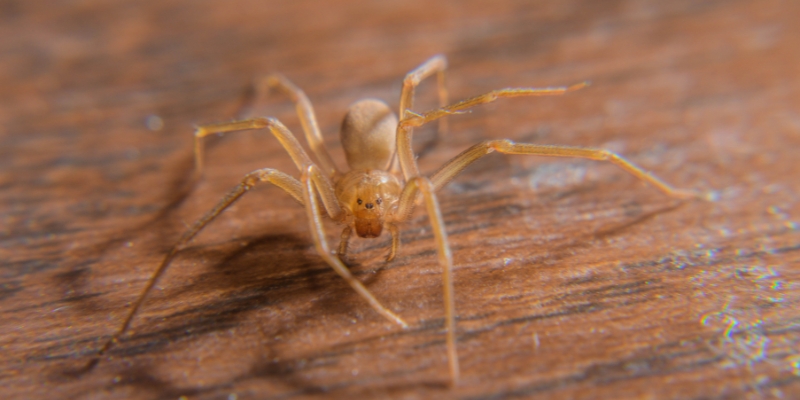
Brown recluse spiders are established in Tennessee, and Nashville falls within their recognized range. They can live in homes and other buildings, especially where dry, protected spaces remain undisturbed. Frequent reports of brown recluse spiders also include many misidentified house spiders, so a clear identification should come before treatment. All Pest Solutions provides Nashville spider control for homes where suspicious spiders or repeated activity needs professional attention.
Nashville Provides Suitable Indoor Habitat
Brown recluse spiders are adapted to the central and south-central United States. Indoor environments can protect them from weather extremes while providing quiet spaces and insect prey. Closets, attics, wall voids, garages, storage rooms, and areas around boxes may offer the darkness and limited disturbance they prefer.
Their secretive behavior affects how common they seem. A building can support brown recluse spiders without producing daily sightings in open rooms. They usually remain concealed during daylight and become more active at night. Wandering males may appear in sinks, tubs, hallways, or along baseboards as they search for mates. Other spiders may enter accidentally and create an isolated sighting with no established indoor population.
The most accurate answer for a particular home depends on evidence from that property. Nashville's location makes brown recluse activity possible, but geography alone cannot identify a spider found behind a couch or in a garage.
Brown Color and a Violin Mark Are Incomplete Clues
Many spiders found in Tennessee are brown. Wolf spiders, nursery web spiders, funnel weavers, and common house spiders are often called brown recluses after a quick glance. Size can also be misleading because a spider's leg span changes how large it appears.
A mature brown recluse typically has a plain tan-to-brown appearance, long unbanded legs, and six eyes arranged in three pairs. Most spiders have eight eyes. The darker violin-shaped mark on the cephalothorax may support an identification, but lighting, angle, age, and natural variation can make that marking difficult to evaluate. Photos that show only the top of a moving spider rarely reveal every feature needed for confidence.
Web style offers another clue. Brown recluse spiders make irregular retreats in protected locations rather than the large, symmetrical outdoor webs associated with orb weavers. Finding a big circular web across a porch opening points toward a different type of spider.
Professional identification is especially useful when several similar spiders appear or when the suspected species could affect treatment decisions. An intact specimen on a monitoring trap is generally more informative than a crushed spider or a distant photograph.
What Frequent Sightings May Indicate
One spider can travel indoors in a box, piece of furniture, or other stored item. It may also wander from a concealed location within the structure. That single event provides a reason to inspect, yet it does not reveal population size by itself.
Multiple brown recluse spiders found over time carry more weight. Repeated catches on glue boards in separate locations, shed skins, egg sacs, or spiders of different ages can point to established activity. The distribution of evidence helps an inspector decide which areas deserve closer attention.
Bedrooms, closets, linen storage, garages, and attics require careful handling because people may reach into items or put on clothing that has been left undisturbed. Shake out stored shoes and garments, keep beds slightly away from walls, and reduce items piled on floors. Use sturdy plastic storage containers where practical. These steps reduce hidden contact points while an identification or inspection is underway.
Brown Recluse Bites Are a Medical Question
Brown recluse spiders generally bite when trapped against the skin, such as inside clothing, bedding, or a handled box. Many skin conditions and other bites are mistakenly attributed to spiders without a captured specimen. Pest-control professionals can identify spiders and evaluate activity, while medical professionals diagnose and treat skin reactions.
Seek medical guidance if you believe a bite occurred or if a skin lesion becomes increasingly painful, discolored, blistered, or accompanied by broader symptoms. Bring a safely contained specimen or clear photograph if one is available. Avoid risking another bite to capture it.
Inspection Creates a Clearer Answer
A useful inspection looks beyond the spider that was seen. It considers storage practices, cracks and voids, insect prey, monitoring results, and the pattern of sightings throughout the building. Glue boards placed along walls and in quiet areas can help show where spiders travel. They work best as monitoring tools within a larger plan, since hidden spiders may never cross them.
All Pest Solutions uses an inspection-based approach and develops treatment plans for the conditions found at the property. If you have found a possible brown recluse or keep seeing similar spiders in your Nashville home, reach out to All Pest Solutions to arrange a professional evaluation.